
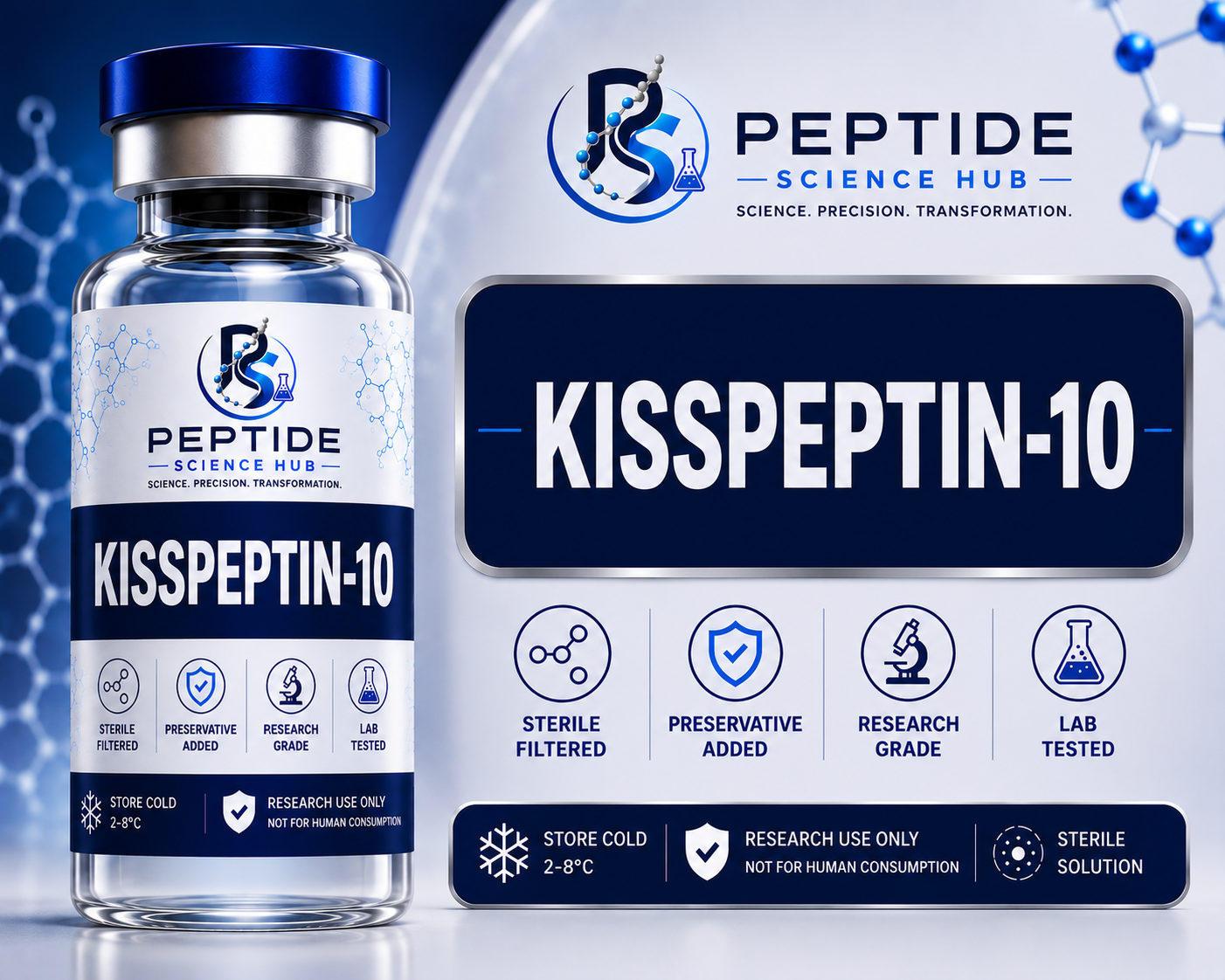
Kisspeptin-10 is a biologically active decapeptide. It represents the C-terminal fragment of the metastin protein. Scientists initially discovered it as a metastasis suppressor gene product. However, subsequent research revealed its primary role in the neuroendocrine system. This peptide acts as a potent endogenous ligand for the GPR54 receptor.
Key Biological Roles
The kisspeptin-GPR54 signaling pathway plays an essential role in reproduction. It initiates gonadotropin-releasing hormone (GnRH) secretion at puberty. Consequently, it regulates the hypothalamic-pituitary-gonadal (HPG) axis. Therefore, it is crucial for overall reproductive function. Furthermore, recent studies suggest broader applications for this peptide.
Metabolic Health Applications
Research indicates Kisspeptin-10 may improve insulin resistance. For example, studies in gestational diabetes models show promise. The peptide activates the cAMP/PKA pathway. As a result, it enhances glucose metabolism. Moreover, this mechanism may benefit metabolic syndrome research.
Neuroinflammatory Modulation
Emerging evidence demonstrates a dual role in neuroinflammation. Kisspeptin-10 inhibits NLRP3 inflammasome activation in microglial cells. Meanwhile, it preserves blood-brain barrier integrity after stroke. These findings suggest potential neurological applications. However, researchers need further validation.
Molecular Characteristics
The human Kisspeptin-10 sequence is YNWNSFGLRF-NH2. This amidation at the C-terminus is vital for its agonist activity. Structure-activity relationship studies have identified critical positions. Specifically, positions 6 (Phe) and 10 (Phe) are essential. Substituting these residues significantly reduces activity. Furthermore, the molecule exhibits a helicoidal structure in membrane-mimetic environments. This structure is necessary for receptor binding.
Storage and Handling
Currently, Kisspeptin-10 is for research use only. It is not approved for human therapeutic use. Researchers should store the lyophilized peptide at -20°C. This temperature ensures long-term stability. For more on peptide handling, review our Peptide Storage Guide. Externally, refer to the PubChem entry for Kisspeptin-10 and the FDA guidelines on research peptides for more information.
Future Research Directions
Scientists continue exploring Kisspeptin-10’s therapeutic potential. Meanwhile, clinical trials remain scarce. Nevertheless, the peptide holds promise for reproductive disorders. Additionally, it may benefit metabolic and neurological conditions. Ultimately, rigorous research will determine its clinical utility.
| Kisspeptin-10 | 5mg, 10mg |
|---|
Be the first to review “Kisspeptin-10”
Related products
Cognitive Peptides
Cognitive Peptides
Aesthetic
Immune Peptides
Uncategorized
Metabolic Modulators
Aesthetic
Performance Peptides
Reviews
There are no reviews yet.